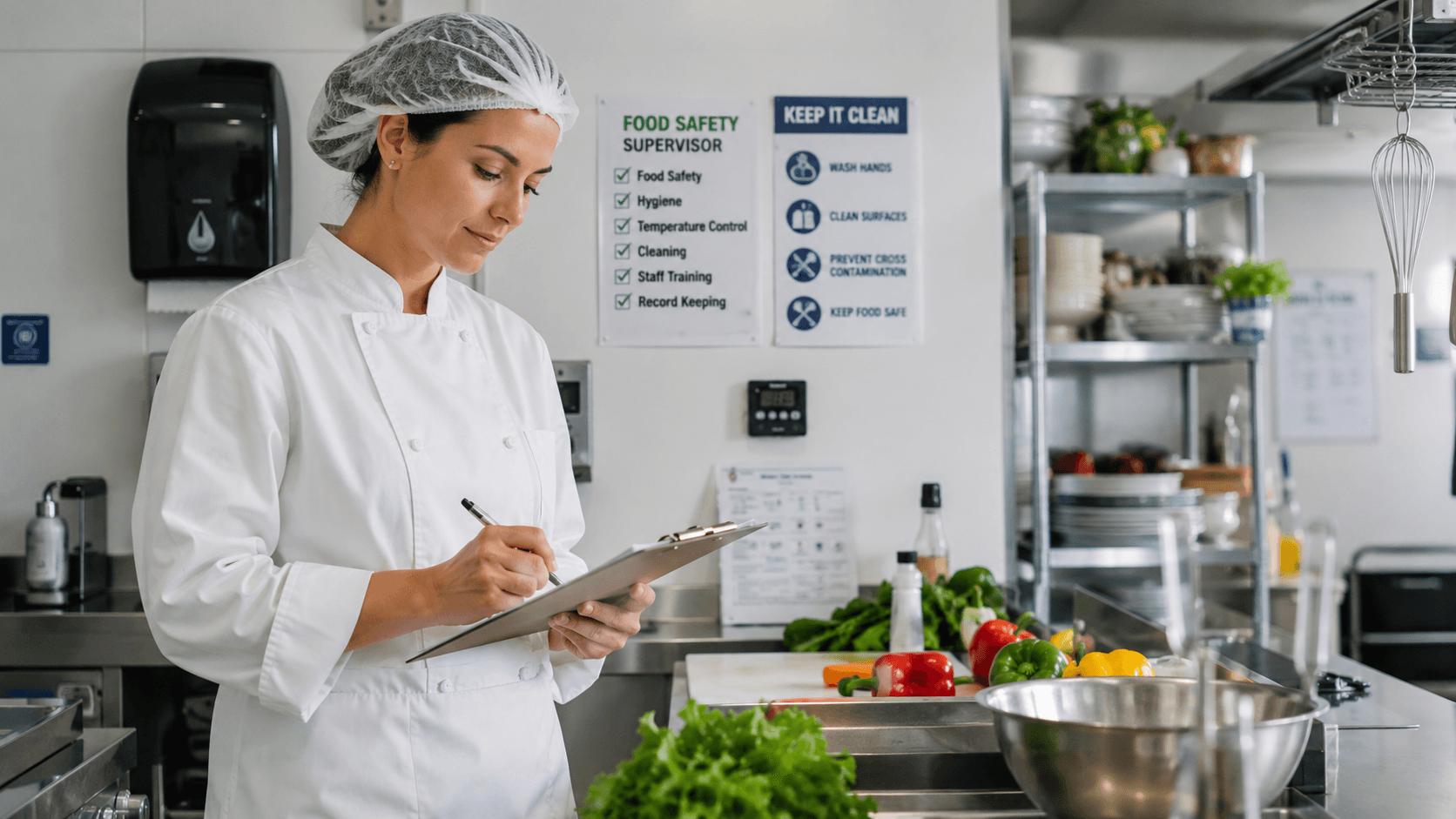
Does My Food Business Need a Food Safety Supervisor in 2026?
A Practical Standard 3.2.2A Checklist for Cafes, Restaurants, Caterers and Food Retailers
If your business prepares, serves or sells unpackaged ready-to-eat food, food safety is not just a workplace priority. It may be a formal compliance requirement.
Australia-wide food safety requirements under Standard 3.2.2A apply to many food service, catering and related retail businesses that handle unpackaged, potentially hazardous food that is ready to eat. Depending on your food-handling activities, your business may need a trained Food Safety Supervisor, appropriately trained food handlers and, for some businesses, evidence that key food-safety controls are being managed.
This guide explains how to identify whether the requirements may apply to your business, the difference between a Food Safety Supervisor and a Food Handler, and the practical steps to take if your team needs training.
Need Food Safety Supervisor training?
Access All Areas Training offers nationally recognised online Food Safety Supervisor Skill Set training. Choose your state or territory and enrol online. View Food Safety Supervisor and Food Handler courses
What Is Standard 3.2.2A?
Standard 3.2.2A - Food Safety Management Tools is a national food safety standard. It applies to specific food service, catering and related retail businesses that handle unpackaged, potentially hazardous food that is ready to eat.
Potentially hazardous foods are foods that generally need temperature control to remain safe. Examples can include meat, foods containing eggs, dairy products, seafood, cut fruit and vegetables, cooked rice, and fresh or cooked pasta.
The standard is designed to strengthen day-to-day food-safety practices in businesses where food may be exposed to contamination shortly before it is sold or served to a customer.
Does Standard 3.2.2A Apply to My Food Business?
The standard may apply if your business handles unpackaged, potentially hazardous food that is:
• used to prepare ready-to-eat food that will be served to a customer; or
• ready-to-eat food intended for retail sale by your business.
Businesses that may need to review their obligations include:
• restaurants, cafes and takeaway food outlets
• caterers and mobile food vendors
• pubs and licensed venues serving food
• bakeries and market stalls
• childcare centres, school canteens, hospitals and aged-care facilities
• supermarkets, delis, service stations and convenience stores handling unpackaged ready-to-eat food
• seafood retailers and butchers handling unpackaged ready-to-eat food.
The exact requirements depend on what your business does with the food. A local council or relevant food regulator can confirm how the standard applies to your operation.
Category One or Category Two: Why the Difference Matters
Under Standard 3.2.2A, affected businesses are generally classified as either category one or category two businesses. The classification determines which food-safety management tools must be in place.
Category One Businesses
A category one business is generally a caterer or food service business that processes unpackaged, potentially hazardous food into ready-to-eat, potentially hazardous food and then serves it directly to the customer without any further processing.
Examples can include restaurants, cafes, takeaway outlets, caterers, bakeries, childcare centres, school canteens and some supermarkets, delis or service stations that prepare food such as sandwiches, salads, pasta dishes or cooked chicken.
Category one businesses generally need all three food-safety management tools:
• Food Handler training or demonstrated skills and knowledge for relevant food handlers
• a certified Food Safety Supervisor
• evidence that important food-safety controls are being managed.
Category Two Businesses
A category two business is generally a food retailer selling potentially hazardous, ready-to-eat food that was handled unpackaged but was not made or processed onsite, apart from activities such as slicing, weighing, repacking, reheating or hot-holding.
Examples can include some supermarkets, delis, seafood retailers, butchers, market stalls, service stations and convenience stores.
Category two businesses generally need:
• Food Handler training or demonstrated skills and knowledge for relevant food handlers
• a certified Food Safety Supervisor.
What Is a Food Safety Supervisor?
A Food Safety Supervisor is a person with recognised formal certification who is appointed to advise and supervise food handlers undertaking relevant food-handling activities.
This is not a title that should be assigned only on paper. The Food Safety Supervisor should be involved in the day-to-day food-handling operations of the business and be reasonably available to staff who need guidance. Depending on the business, the role may be performed by an owner, manager, chef, cook or another suitably experienced team member with the authority to address food-safety issues.
A Food Safety Supervisor should be able to:
• identify and correct food-safety risks
• support staff with safe food-handling practices
• help review workplace procedures
• promote a consistent food-safety culture
• provide evidence of their certification if requested by an authorised officer.
How Long Is a Food Safety Supervisor Certificate Valid?
A Food Safety Supervisor certificate must have been obtained within the previous five years. Businesses should check the date of their nominated supervisor's certificate and avoid waiting until the last minute to organise renewal training.
A simple certificate register can help employers track:
• the nominated Food Safety Supervisor for each location
• the date each certificate was issued
• the date renewal training should be reviewed
• whether backup supervisors are available for leave, roster changes or staff turnover.
Is your Food Safety Supervisor certificate approaching five years?
Complete the nationally recognised Food Safety Supervisor Skill Set online and keep your workplace training records current. Choose your course and enrol online
Do Other Staff Still Need Food Handler Training?
Yes. Appointing a Food Safety Supervisor does not remove the need to make sure relevant food handlers have appropriate food-safety skills and knowledge.
Food handlers in affected category one and category two businesses must complete food-safety training or demonstrate adequate skills and knowledge before handling unpackaged, potentially hazardous, ready-to-eat food.
Food Handler training should cover:
• safe food-handling practices
• food contamination risks
• cleaning and sanitising food premises and equipment
• personal hygiene.
For employers, keeping training records is a practical way to monitor staff readiness and demonstrate that training gaps are being addressed.
What Records Should a Category One Business Keep?
Category one businesses must be able to demonstrate that key food-safety controls are being managed. This may involve keeping records or using another method that clearly demonstrates compliance to an authorised officer.
Important areas can include:
• temperature control during receipt and storage
• cooking or other pathogen-reduction steps
• cooling and reheating food safely
• temperature control during display and transport
• cleaning and sanitising food-contact surfaces and equipment.
Records are not busywork. They help a business identify failures early, support consistent processes across shifts and provide evidence when an authorised officer requests it.
Food Safety Supervisor Compliance Checklist for Business Owners
Use this checklist to review your current position:
• Identify whether your business handles unpackaged, potentially hazardous, ready-to-eat food.
• Confirm whether your operation is likely to be category one or category two.
• Nominate a suitably qualified Food Safety Supervisor who is reasonably available to staff.
• Check whether the Food Safety Supervisor certificate was issued within the previous five years.
• Identify relevant food handlers and review whether they have appropriate training, skills and knowledge.
• Maintain an accessible staff-training register and certificate records.
• For category one businesses, review how key food-safety controls are recorded or demonstrated.
• Contact your local council or relevant food regulator if you need confirmation of the requirements for your business.
Complete Food Safety Training Online with AAAT
Access All Areas Training (AAAT, RTO 52312) provides nationally recognised online food-safety training for individuals and employers across Australia.
AAAT offers:
• Food Safety Supervisor Skill Set training for people who need to supervise food handling in the workplace
• Food Handler training for staff who need foundational food-safety skills
• online enrolment and flexible course access
• training options for employers managing staff across one or multiple locations.
To review the available courses, view AAAT food-safety training online.
For businesses managing team training, visit the AAAT Employer Training Portal.
Frequently Asked Questions
Does every food business need a Food Safety Supervisor?
No. The requirements depend on the food-handling activities carried out by the business. Standard 3.2.2A applies to specific food service, catering and related retail businesses handling unpackaged, potentially hazardous food that is ready to eat. Contact your local council or relevant food regulator if you are unsure.
Can the business owner be the Food Safety Supervisor?
Yes, provided the owner has the required certification and is reasonably available to advise and supervise relevant food handlers. A manager, chef, cook or other suitably qualified employee may also be nominated.
Can one Food Safety Supervisor cover multiple locations?
The nominated supervisor must be reasonably available to advise and supervise relevant food handlers. Whether one person can reasonably cover multiple sites depends on the operating model, rosters and accessibility of that person. Businesses should confirm their arrangements with the relevant regulator.
Does a Food Safety Supervisor certificate expire?
A Food Safety Supervisor certificate must have been obtained within the previous five years. Businesses should monitor certificate dates and organise renewal training before the five-year period is reached.
Do food handlers need a nationally recognised certificate?
Standard 3.2.2A requires relevant food handlers to complete food-safety training or have adequate skills and knowledge for the work they perform. Many employers choose formal Food Handler training because it provides a consistent and recordable training pathway.
Is online Food Safety Supervisor training available?
Yes. AAAT provides nationally recognised online Food Safety Supervisor Skill Set training. Course options are available through the AAAT food-safety training page.
What is the difference between Food Handler and Food Safety Supervisor training?
Food Handler training is designed for staff who handle food and need foundational food-safety skills. Food Safety Supervisor training is for a person appointed to provide advice, oversight and supervision within the workplace.
Where can I confirm the legal requirements for my business?
Start with your relevant state or territory food regulator and your local council or environmental health service. They can confirm how Standard 3.2.2A applies to your specific business activities.
Take the Next Step
Food-safety compliance should not depend on one staff member remembering what needs to happen. The strongest approach is to identify your obligations, appoint the right supervisor, train the relevant team members and keep your records current.
View AAAT Food Safety Supervisor and Food Handler courses and enrol online.
Important Information
This article provides general information only. Food-safety obligations can vary depending on your business activities, location and regulatory requirements. Contact your local council or relevant state or territory food regulator for advice specific to your business.
For further information about Standard 3.2.2A, refer to the Food Standards Australia New Zealand overview of food-safety management tools.
About Access All Areas Training
Access All Areas Training (AAAT) has been delivering nationally accredited hospitality compliance training across Australia for over 20 years. As a registered training organisation (RTO 52312) approved by the Australian Skills Quality Authority (ASQA), AAAT has helped more than 200,000 students complete their RSA, Food Safety and Approved Manager training. AAAT is also an approved training provider under the NSW Food Authority (provider number 25813).
Disclaimer: The information in this article is provided for general guidance only and reflects regulatory requirements at the time of writing. Regulatory requirements and state-specific rules can change. Students are encouraged to verify current requirements with the relevant state or territory authority before enrolling in any course.